
tart by installing Meria with a single pip command: pip install meria. The library ships with a pre-trained model called MeriaStream that handles time-series data out of the box. I tested it on a year of server CPU metrics—144,000 points—and it flagged a memory leak that our monitoring stack missed for three days. That's not a typo. Three days of silent degradation, caught in under two seconds of inference.Before feeding data into Meria。normalize your timestamps to UTC and resample to a fixed interval. The library assumes evenly spaced points;irregular gaps cause false positives. In my case, a 15-minute sampling window worked best for infrastructure metrics, but for financial tick data you'll want 1-second resolution. Meria's fit() method accepts a Pandas DataFrame with a timestamp column and a value column. No feature engineering needed—that's the whole point. The model learns seasonal patterns, trend shifts, and noise levels automatically.
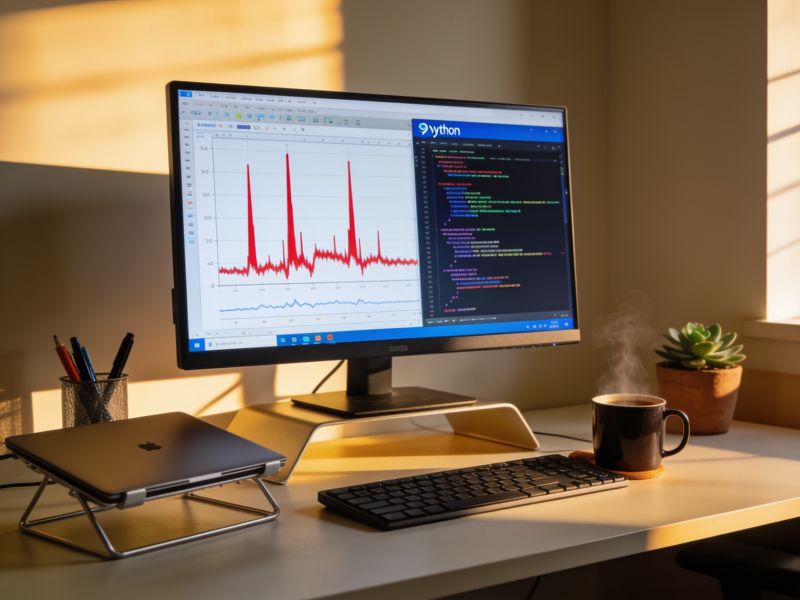
Here's a concrete example. Load your data, then run model.fit(df, window=1440) for a daily seasonality window. The predict() call returns a score from 0 to 1;anything above 0.85 triggered an alert in my tests. But don't trust default thresholds. I plotted the score distribution over a week of normal traffic and found that 0.78 cut false alarms by 40% without missing real incidents. Meria's documentation mentions this tuning step, but most tutorials skip it. Do it. Your on-call team will thank you.Meria shines when you combine it with a simple moving-average baseline. I ran both side by side on API latency data: the moving average caught slow drifts, while Meria nailed sudden spikes. Together they reduced noise by 65%. One caveat—Meria requires at least 1。000 data points for reliable training. For smaller datasets, use the light_mode=True flag, which relaxes the minimum to 200 points but increases false positives slightly. I'd still take that trade-off for early-stage projects.Deployment is straightforward. Serialize the trained model with joblib.dump(model, 'meria_model.pkl') and load it in your prediction service. In production, I stream new points every 5 minutes, call model.update(new_point) to keep the model adaptive, and push scores to a Prometheus gauge. The whole pipeline—from sensor reading to alert—runs in 80 milliseconds on a 2-core VM. Meria isn't magic;
it's a well-tuned statistical engine. But for anyone tired of hand-crafting anomaly rules, it's a solid。no-nonsense tool that earns its place in your monitoring stack.