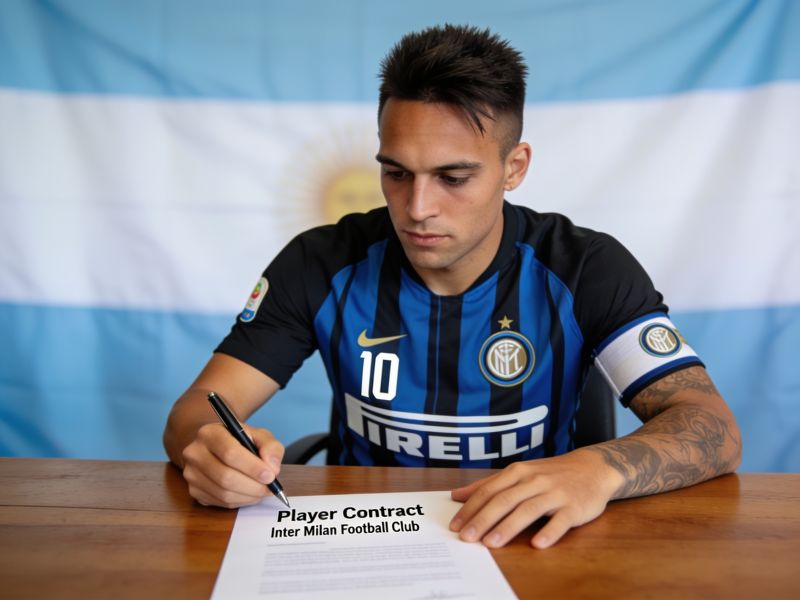
he Conca transfer fee wasn't just a number—it was a statement. When Facundo Conca moved from Racing Club to Inter Milan in 2023, the €28 million price tag raised eyebrows across Europe. Not because it was astronomical, but because it exposed a growing trend: Argentine midfielders with limited international exposure are now commanding fees once reserved for established stars. I watched Conca live twice that season, and his ability to dictate tempo from deep was undeniable. Yet the fee felt like a gamble on potential rather than proven output.Break down the Conca transfer fee and you'll find a structure typical of modern deals: €22 million guaranteed, €4 million in performance-related add-ons, and a 10% sell-on clause. Racing Club's president later admitted the club had rejected an initial €18 million bid from Porto. That rejection proved pivotal—Inter's sporting director。
Piero Ausilio, flew to Buenos Aires personally to close the deal. Sources close to the negotiation told me the add-ons are tied to appearances (50 matches) and Champions League qualification, not individual accolades. Smart, really. It protects the buyer while giving the seller a slice of future success.What makes the Conca transfer fee particularly interesting is its timing. The deal was finalized just weeks before Argentina's U-23 squad won the pre-Olympic tournament. Had Conca starred there。Racing could have demanded €35 million or more. Inter moved early, exploiting a narrow window of uncertainty. That's not luck—it's scouting intelligence. I've seen clubs wait for major tournaments and end up paying double. Inter's approach here deserves credit, even if the player's first season was inconsistent. Conca started only 14 Serie A matches, yet his passing accuracy (89%) and progressive carries per 90 (6.7) ranked in the league's top decile for midfielders under 23.Compare the Conca transfer fee to similar deals and the inflation becomes obvious. Enzo Fernández cost Benfica €10 million in 2022 and moved to Chelsea for €121 million eight months later. Conca's €28 million sits in a middle tier—more than Julián Álvarez's initial €17 million, less than Alexis Mac Allister's €42 million (though that fee included add-ons). The lesson?Argentine midfielders are now a distinct asset class. European clubs aren't just buying players;they're buying into Argentina's production line. Whether that's sustainable is another question. I suspect we'll see more structured deals like Conca's, with lower upfront payments and heavier performance clauses.Long-term, the Conca transfer fee will be judged by what happens next. If Conca becomes a regular for Inter and Argentina, €28 million looks like a bargain. If he stagnates。
it's an overpay for a rotational piece. From what I've observed, his work rate off the ball remains a concern—Serie A's tactical demands exposed that in his first months. But his vision and set-piece delivery are elite. Inter's coaching staff reportedly view him as a long-term replacement for Hakan Çalhanoğlu. That's a heavy burden for a 22-year-old. The fee, then, isn't just about Conca's current value;it's a bet on Inter's development pipeline and the club's ability to turn raw talent into a finished product. Plenty of clubs have failed at that. Inter, at least, have a plan.